FibreState.
A genderless, seasonless sustainable fashion brand built on regenerative, biodegradable fibres. I developed the business proposition, visual identity and website and directed the brand photography. It scored 84%, a high first.
FibreState is a genderless, seasonless fashion brand concept that redefines materials for a sustainable future, using biodegradable, polymer-based fibres. I created it as a university project at Warwick, developing the business proposition, designing the visual identity, building the company website and directing the brand photography.
The project scored 84%, a high first, and I went on to give a talk on it to students at Elon University.
The mission
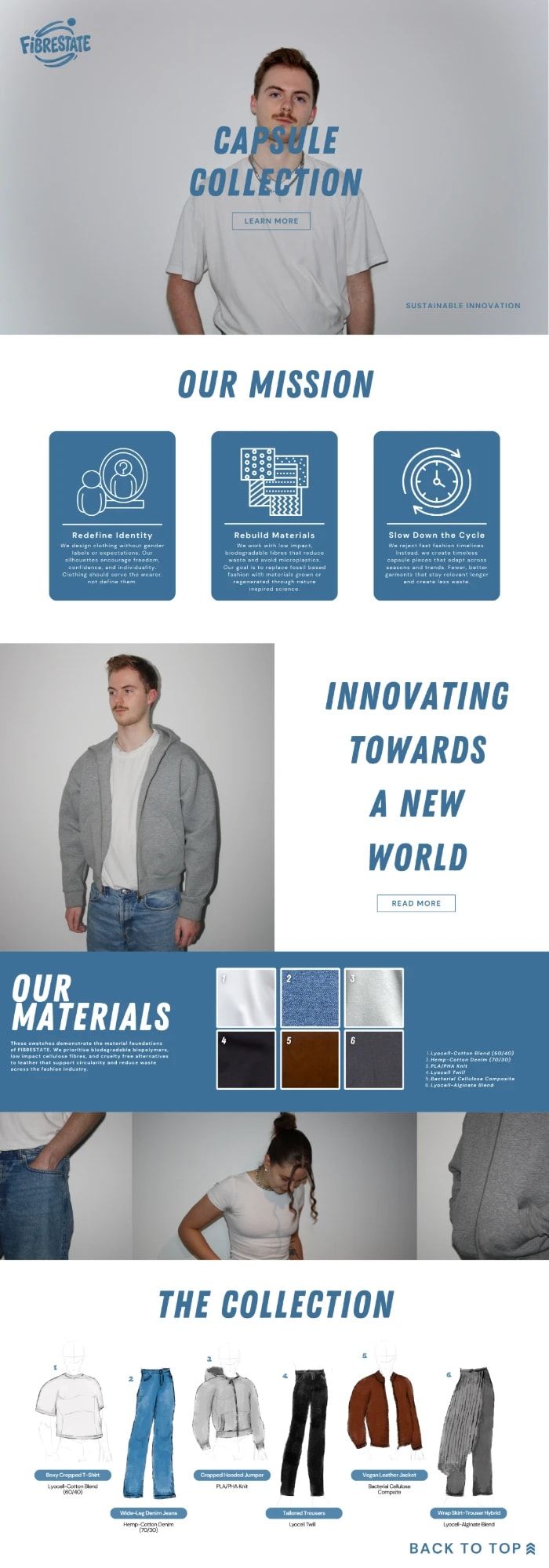
FibreState is built on three ideas, which lead the homepage.
Redefine identity: clothing designed without gender labels or expectations, with silhouettes that encourage freedom, confidence and individuality. Clothing should serve the wearer, not define them.
Rebuild materials: low-impact, biodegradable fibres that reduce waste and avoid microplastics, replacing fossil-based fashion with materials grown or regenerated through nature-inspired science.
Slow down the cycle: rejecting fast fashion timelines in favour of timeless capsule pieces that work across seasons and trends. Fewer, better garments that stay relevant for longer.
The capsule collection
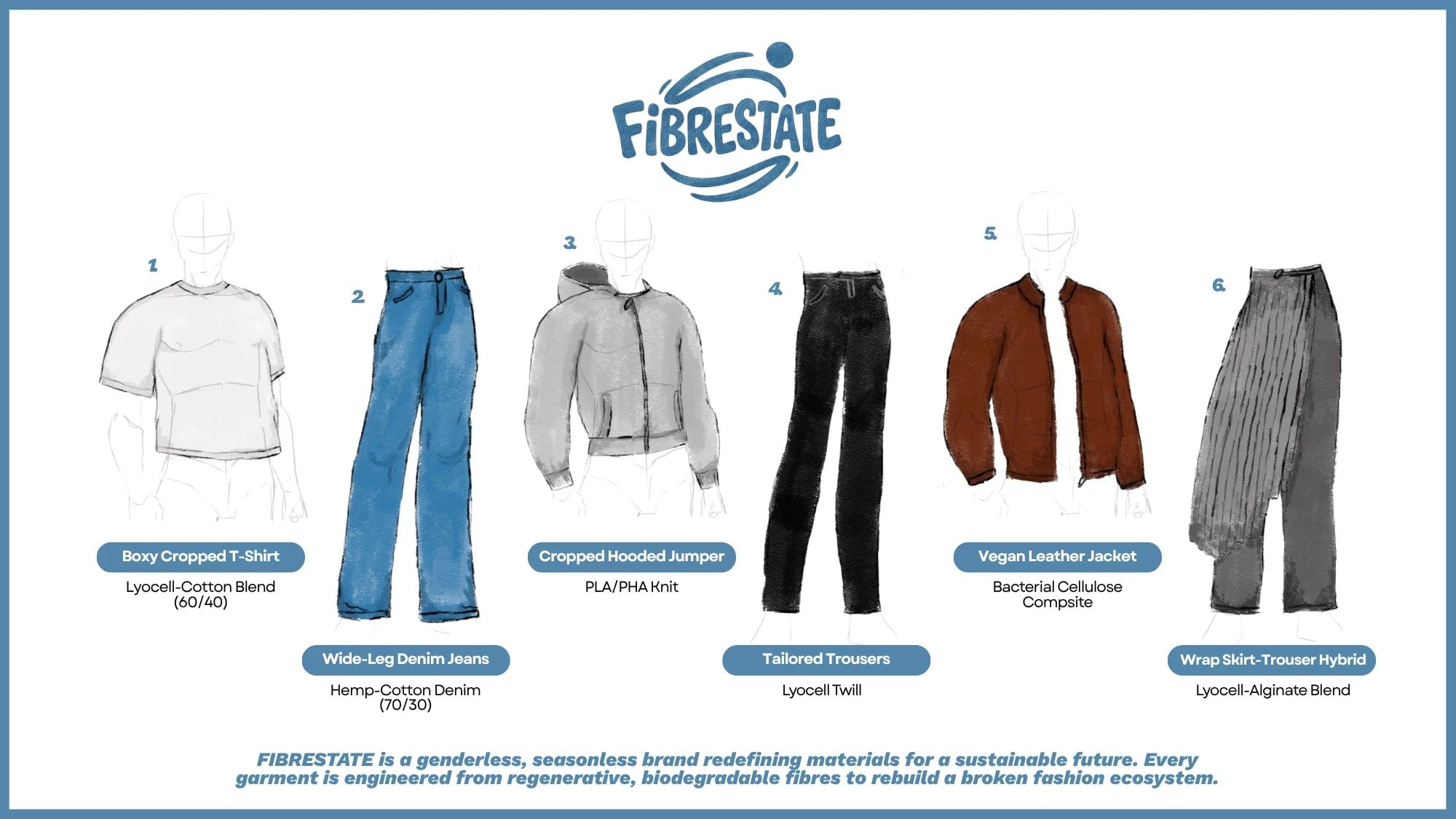
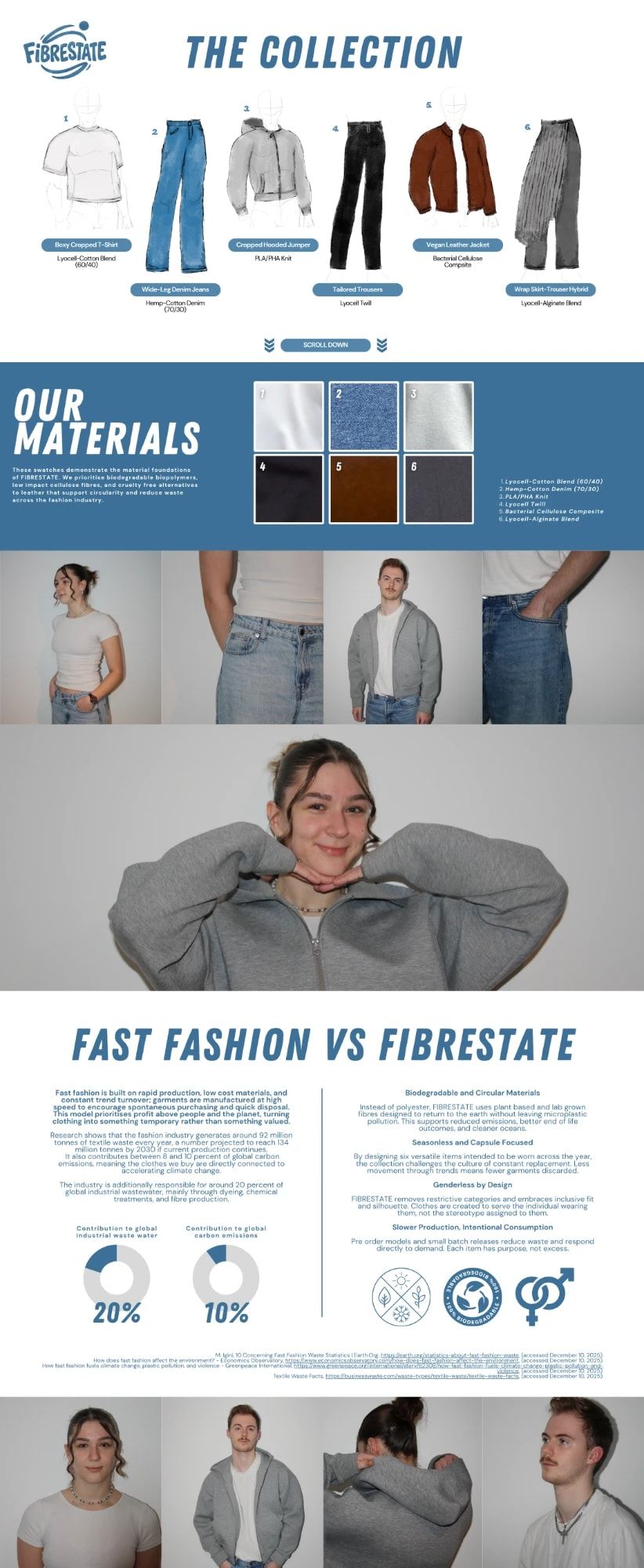
The capsule collection is six pieces, each made from a different sustainable material: a boxy cropped T-shirt in a lyocell-cotton blend, wide-leg jeans in hemp-cotton denim, a cropped hooded jumper in a PLA/PHA knit, tailored trousers in lyocell twill, a vegan leather jacket in a bacterial cellulose composite and a wrap skirt-trouser hybrid in a lyocell-alginate blend.
Every garment is engineered from regenerative, biodegradable fibres, with the aim of rebuilding a broken fashion ecosystem. Keeping it to six pieces was intentional: a small, seasonless capsule encourages a more conscious approach to buying clothes.
Innovating towards a new world
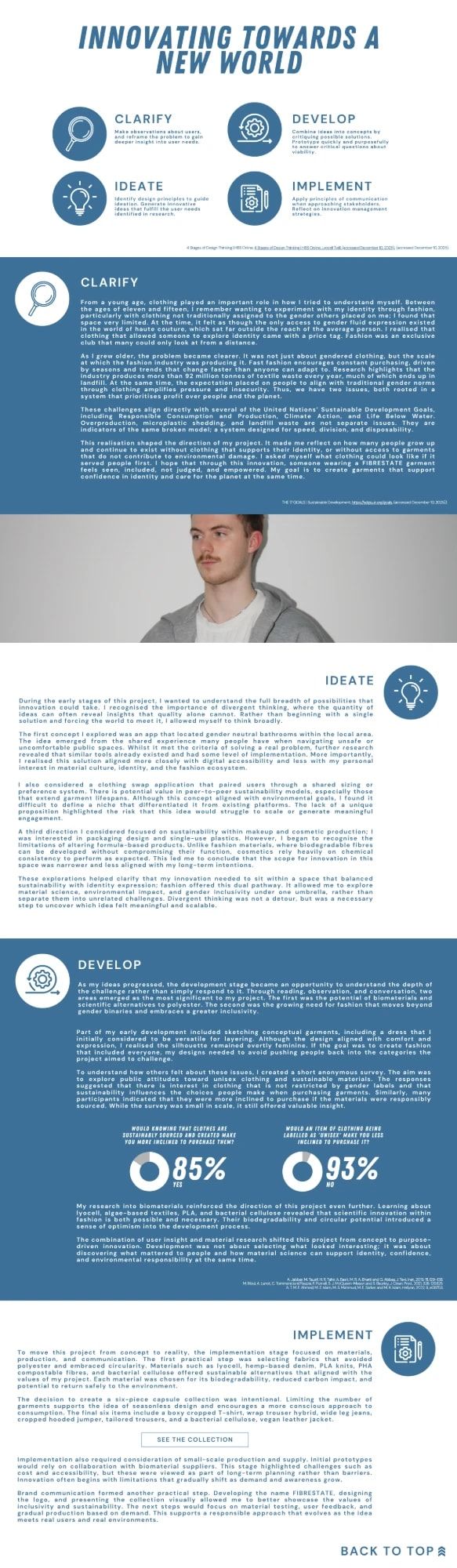
I shaped the project with design thinking, in four stages.
Clarify. Between the ages of 11 and 15 I experimented with my identity through fashion, especially clothing not traditionally assigned to my gender, but there was very little space for it. As I got older I saw the bigger problem: not just gendered clothing, but the scale of fashion production. The industry produces more than 92 million tonnes of textile waste every year. Both issues come from a system that puts profit before people and the planet.
Ideate. I explored several directions first: an app to find gender-neutral bathrooms, a clothing swap app that matched people by size and a focus on sustainable cosmetic packaging. Each helped me narrow the scope until fashion stood out as the space that brought identity, environmental impact and inclusivity together.
Develop. I researched biomaterials such as lyocell, algae-based textiles, PLA and bacterial cellulose as alternatives to polyester. Early sketches included a dress, but I realised the silhouette still read as feminine, so I moved away from anything that pushed people back into categories. A short anonymous survey backed the direction: 85% said knowing clothes were sustainably sourced would make them more inclined to buy, and 93% said a unisex label wouldn't make them less inclined.
Implement. I chose materials that avoid polyester and planned for small-scale production with biomaterial suppliers, recognising cost and accessibility as challenges. Then I brought it to life through the name, the logo and the collection visuals.
Fast fashion vs FibreState
Fast fashion is built on rapid production, cheap materials and constant trend turnover. The industry is responsible for around 20% of global industrial wastewater and between 8% and 10% of global carbon emissions.
FibreState answers that with four principles: biodegradable, circular materials instead of polyester; a seasonless six-piece capsule instead of constant replacement; genderless design with inclusive fits; slower production, with pre-orders and small batches so every item has a purpose.
The brand photography, which I directed, shows the collection on two models against a plain backdrop.
Bigger goals and next steps
The project connects to five of the UN Sustainable Development Goals: Gender Equality (5), Industry, Innovation and Infrastructure (9), Responsible Consumption and Production (12), Climate Action (13) and Life Below Water (14).
The next steps I set out were to build a social presence and gather feedback; launch pre-orders to measure interest; host a pop-up launch event; respond to feedback and expand the capsule; then grow through iteration with a long-term vision.
Presenting it
I presented FibreState to academics and students at Elon University in the USA.